The box is the first thing anyone touches. Before a single card is dealt, a custom deck is judged by the package it slides out of, and on a retail shelf or a gift table the box is doing the work of selling. Yet packaging is usually the last decision a buyer makes, bolted on after the card faces are settled. That order gets it backwards, because the box style is not a cosmetic afterthought: it is dictated by how many cards you are putting in it, and it sets the ceiling on how premium the finished deck can feel.
This is a look at the parts of a playing card package that actually move cost and perceived quality, in the order a printer will ask about them.
Card count decides the box style
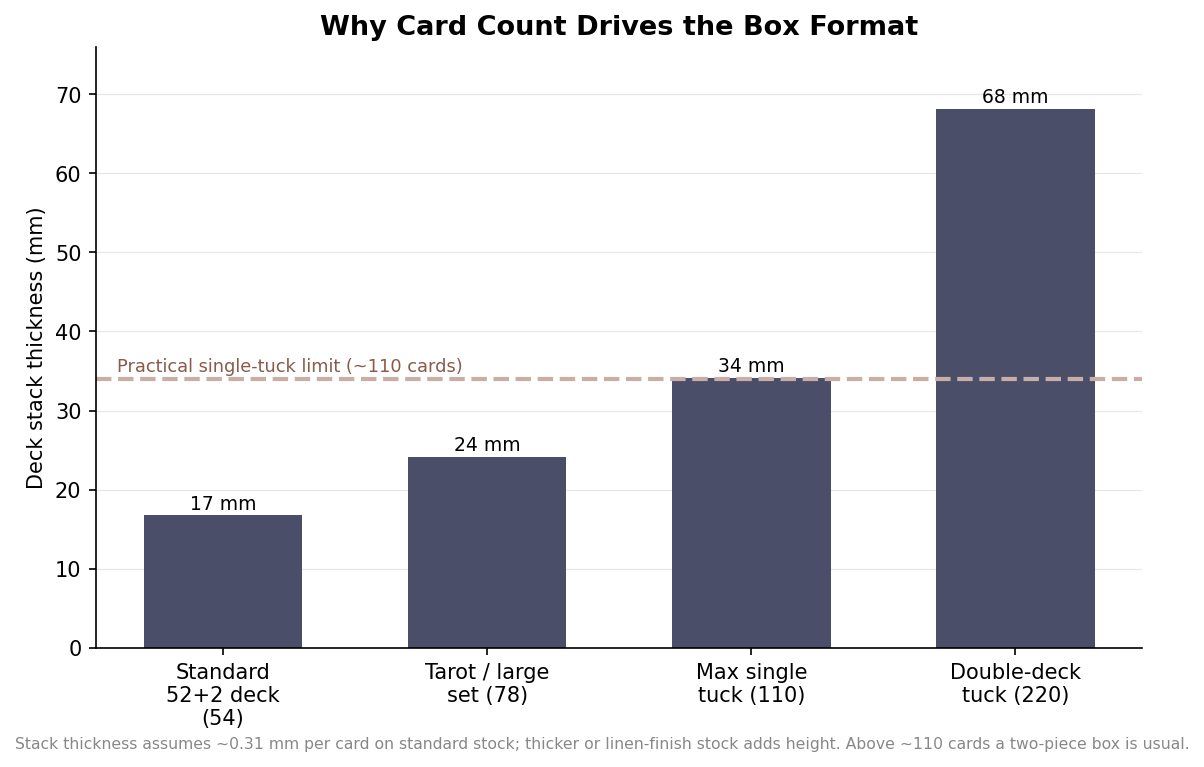
A standard tuck box holds a normal deck comfortably, but “normal” has limits, and they are physical. Cards stack at roughly a third of a millimeter each on standard stock, so a 54-card deck is about a 17 mm brick while a 110-card set is past 34 mm, and a double-deck box climbs toward 68 mm. Somewhere around 110 cards a single tuck flap stops closing cleanly, which is why box format tracks card count so directly.
The common tuck styles trade material against strength. A straight tuck end tucks both flaps the same direction so no raw edge shows on the front panel, which reads as the more premium option. A reverse tuck end alternates the flaps, which is more material-efficient and cheaper but shows a seam. For heavier decks, an auto-lock or snap-lock bottom forms a self-locking base that resists blowing open under weight. Past the tuck-box range, a two-piece rigid box with a separate lid becomes the norm for large sets and gift editions, where the paperboard is thicker and the box holds its shape like a lid-and-base gift box rather than a folded carton.
Stock and caliper set the feel
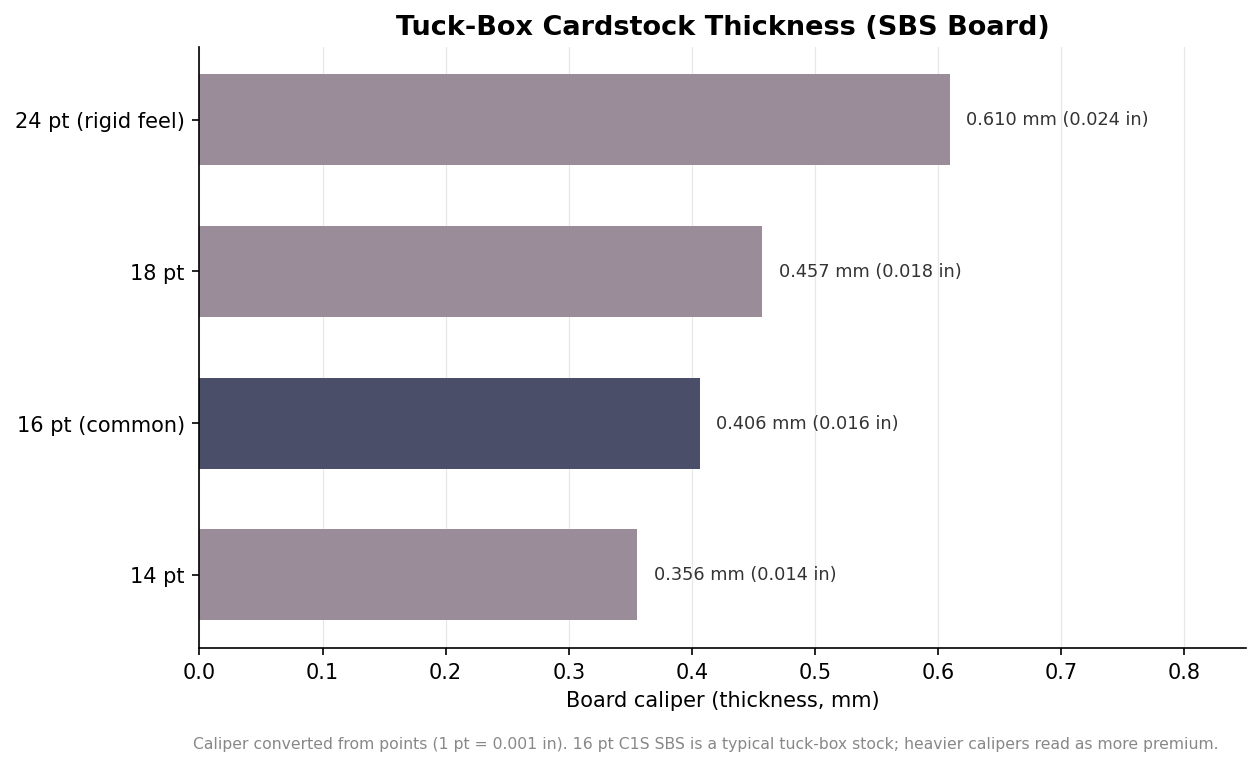
Tuck boxes are typically printed on solid bleached sulfate board, coated on one side so the outside takes crisp print while the inside stays plain. The workhorse caliper is around 16 point, which is 0.406 mm, thick enough to feel solid without being stiff to open. Going up to 18 or 24 point makes the box noticeably more rigid and expensive, a move that suits a collectible or gift deck but is wasted on a promotional giveaway that gets opened once. The caliper is a genuine lever on perceived quality: a thin box telegraphs “cheap deck” before anyone sees the cards, and a heavier one does the opposite, which is why the stock decision deserves to be made deliberately rather than left at the printer’s default.
Finishing is where a box stops looking generic
Once the structure and stock are set, finishing is what separates a memorable package from a plain printed carton. Foil stamping presses metallic film into the board for a reflective logo or border and is the single most recognizable “premium” cue. Embossing and debossing raise or press the board itself, adding a tactile element that survives even when the box is closed in a drawer. Spot UV lays a glossy varnish over selected areas so a matte box gets a subtle sheen exactly where you want the eye to land, while overall matte or gloss lamination changes the whole surface, matte reading as understated and gloss as vivid. An aqueous coating is the recyclable middle path, protecting the print without a plastic film. These effects stack, but each one adds cost and often a production step, so the useful discipline is choosing the one or two that carry the brand rather than ordering all of them.
Sealing and security
How the box is closed matters more than it looks, especially for anything sold rather than given away. Cellophane or shrink wrap around the whole box signals to a buyer that the deck is factory-fresh and unopened, which is close to mandatory for retail and reassuring for a gift. A security seal sticker across the tuck flap, a descendant of the old tax stamps on playing cards, adds a tamper-evident touch and a small extra branding surface. For a promotional deck handed out at an event, sealing may be unnecessary and simply adds cost; for a deck on a shop shelf next to competitors, its absence is conspicuous. Decide sealing by where the deck ends up, not by habit.
Match the box to where the deck lives
Everything above resolves once you know the deck’s destination. A promotional giveaway wants a standard reverse-tuck box on a moderate caliper with a single strong finishing touch, because unit cost governs and the deck will be opened immediately. A retail deck justifies a straight-tuck box, shrink wrap, and foil or spot UV, because it has to win a glance on a shelf and prove it is sealed. A gift or collector edition earns a two-piece rigid box, a heavier caliper, and layered finishing, because the package is part of the product and the buyer is paying for presentation. The mistake is treating packaging as a uniform add-on. Specify the box style from your card count, the caliper from the feel you want, the finishing from the one brand cue that matters most, and the sealing from where the deck will be sold, and the package will fit the deck instead of merely containing it.